Don't stop at getting traffic. Start optimizing conversions.
Shopify merchants can now track more conversion data than ever: product views, add-to-cart events, checkout starts, purchases, ROAS, revenue, customer acquisition cost, and campaign performance across Google, Meta, TikTok, GA4, and more.
That data is essential. Without accurate tracking, teams cannot judge which campaigns work, which traffic sources convert, or where revenue is leaking. Clean conversion data also gives ad platforms better signals, which can improve optimization over time.
But once tracking is reliable, another question appears:
Why did shoppers still not buy?
That is where UX Agent fits into the Shopify growth stack.
JTracking helps Shopify teams capture cleaner conversion data and send better signals to ad platforms. UX Agent helps teams understand the shopper behavior behind those numbers.
Together, they support two sides of the same growth workflow: accurate measurement and actionable diagnosis.
Why Shopify Teams Need More Than Dashboards
A dashboard can show that add-to-cart rate is down. It can show that checkout starts are not turning into orders. It can show that one paid campaign converts worse than another.
But it usually cannot explain the shopper experience behind the drop-off.
Maybe mobile shoppers cannot find the variant selector. Maybe users scroll up and down because sizing information is unclear. Maybe the add-to-cart button is hidden too far down the page. Maybe shipping cost appears later than expected. Maybe users interact with a discount field, see an error, and lose confidence.
These small moments are hard to see in aggregate metrics. They are also hard to find by manually watching hundreds of session recordings.
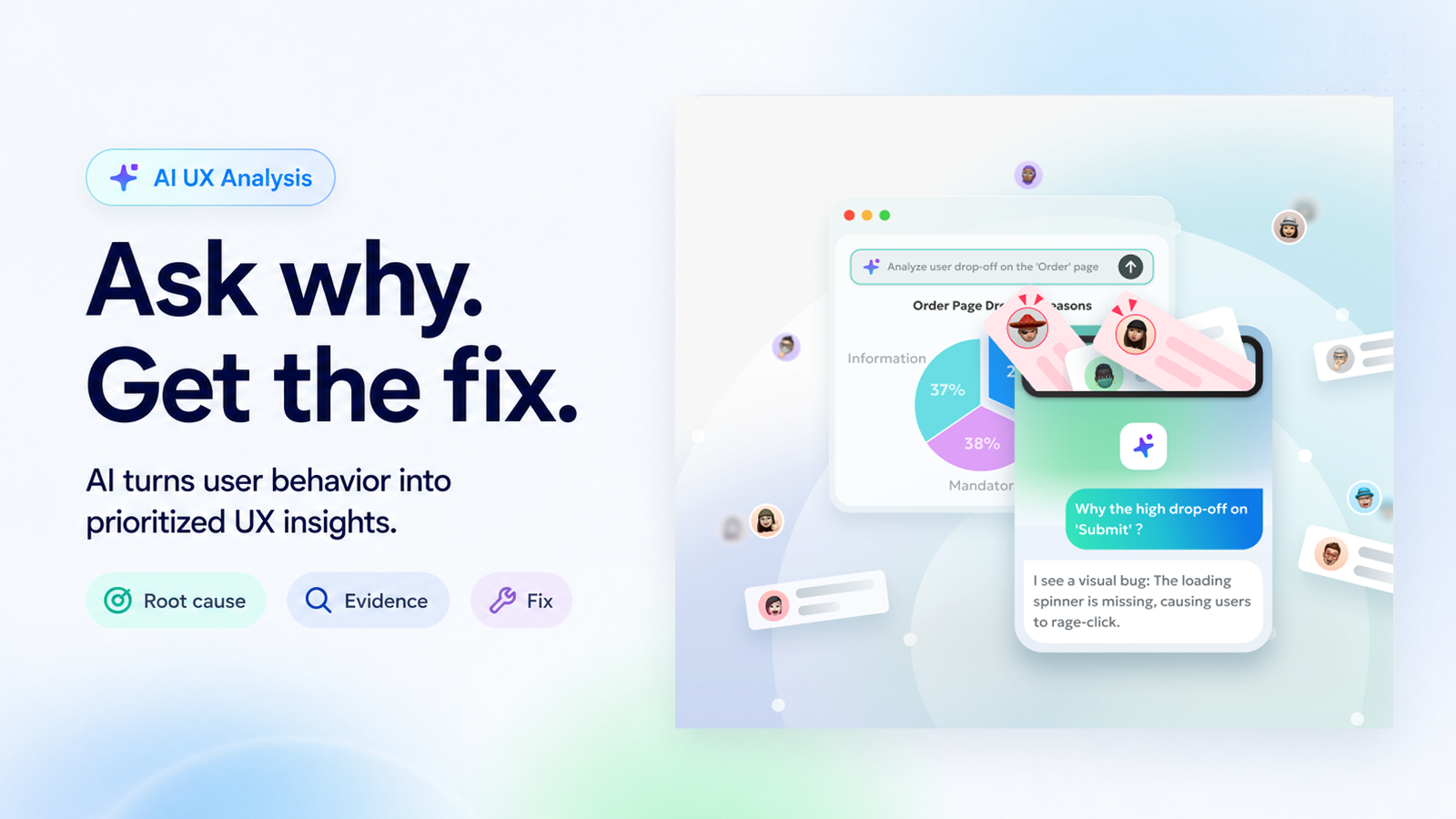
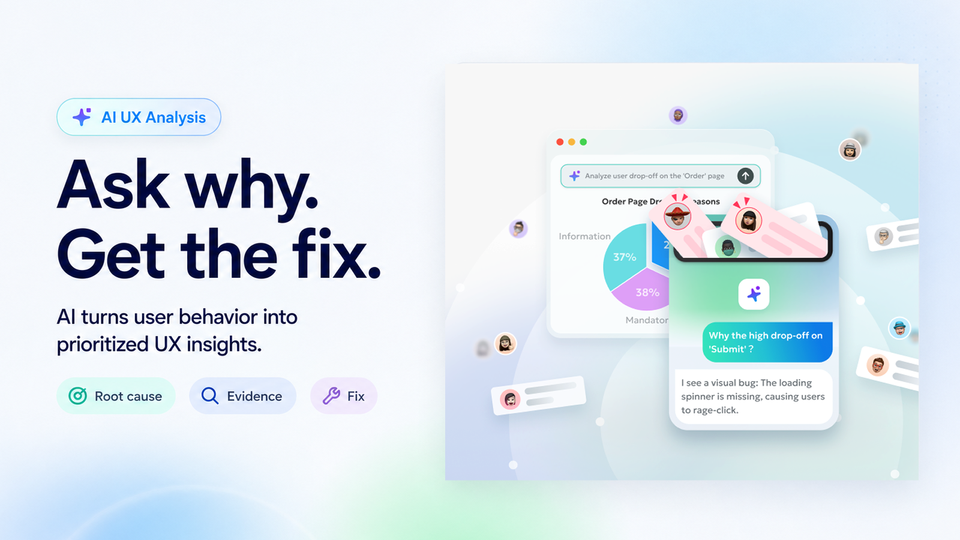
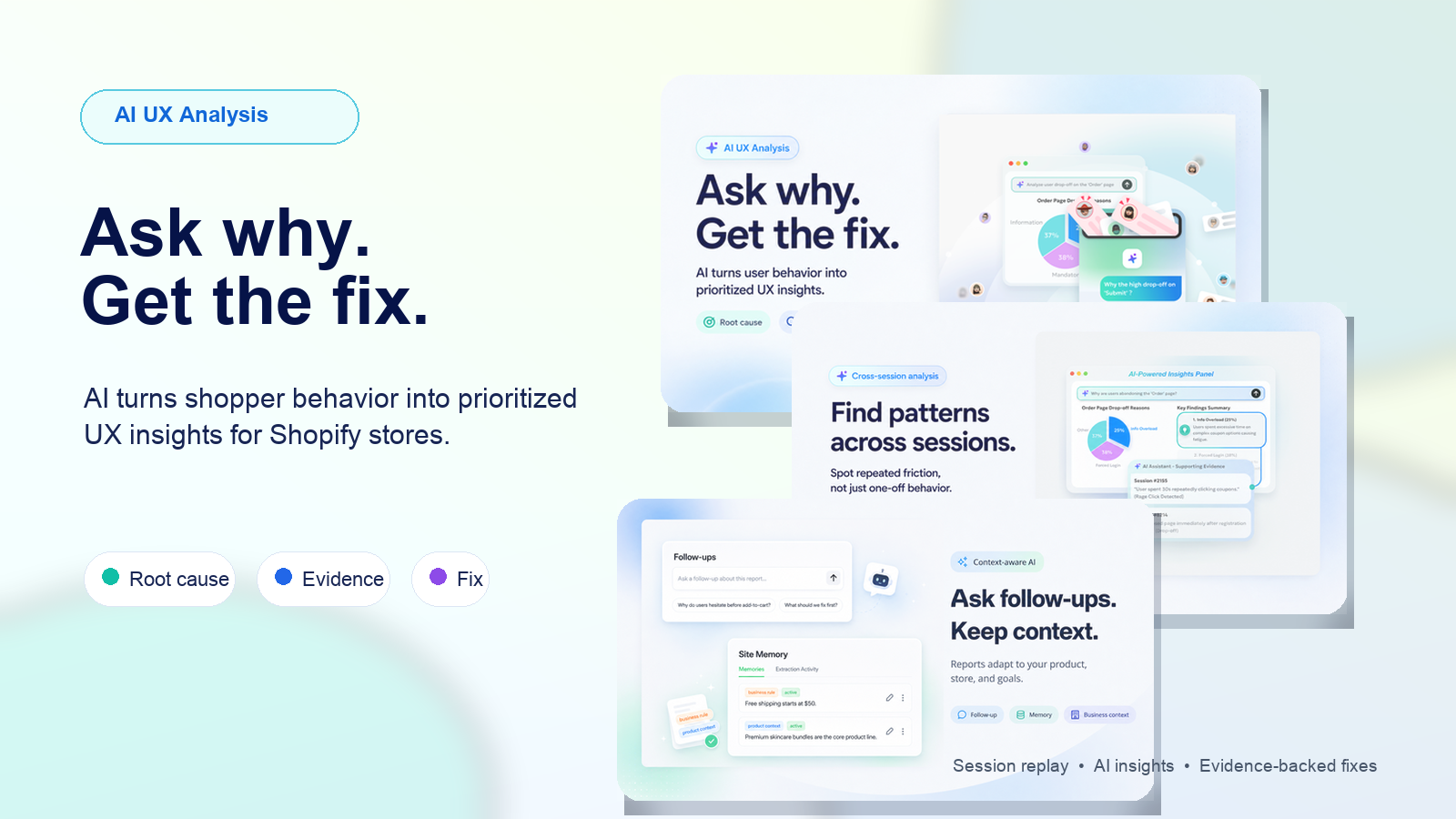
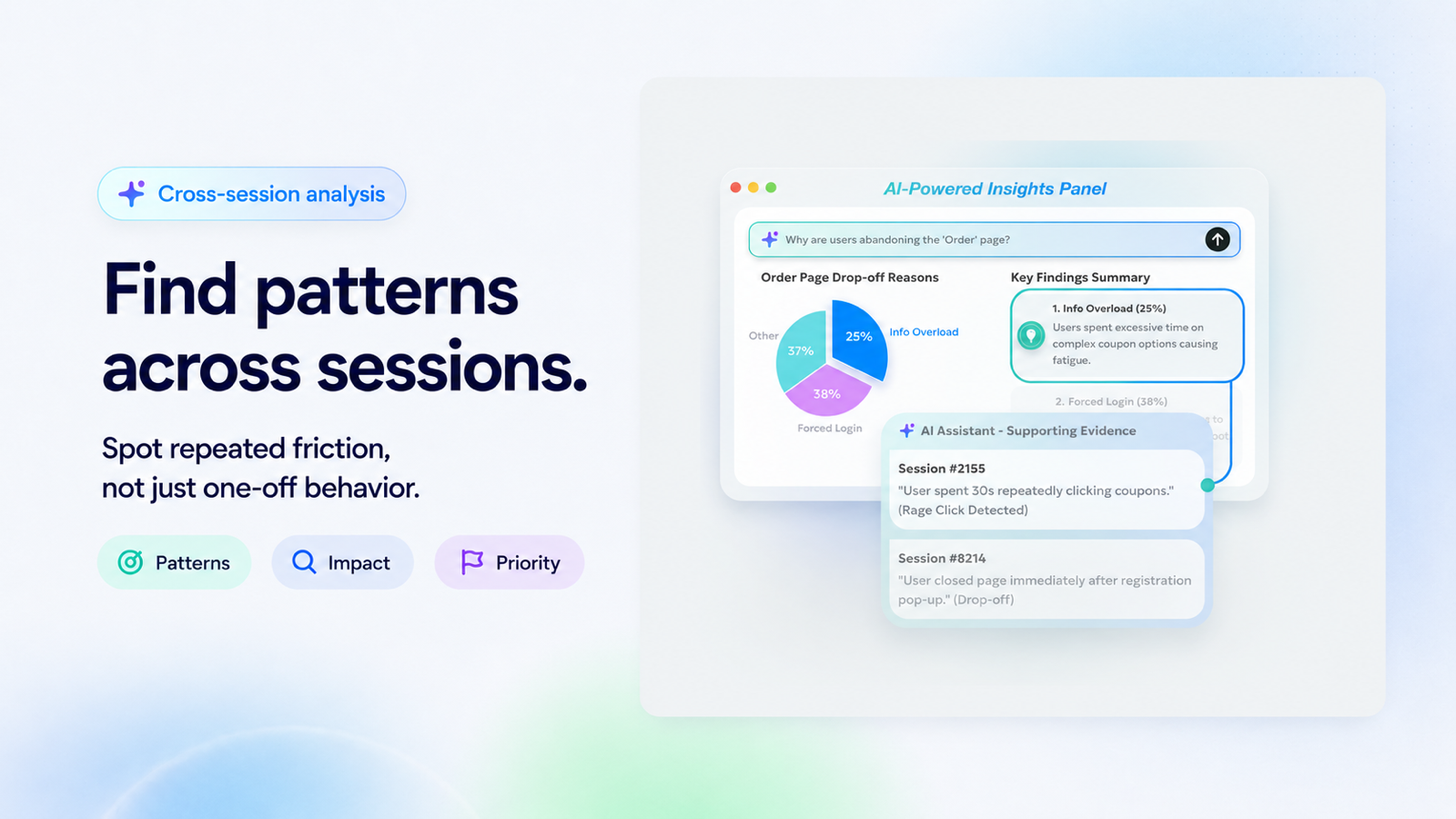
UX Agent uses Session Replay + Vision AI to analyze shopper journeys at scale. It summarizes what users did, identifies repeated friction patterns, and turns behavior evidence into clear conversion insights.
Instead of asking a team to watch every replay, UX Agent helps answer:
- Where did shoppers hesitate?
- Which page or step created friction?
- What behavior pattern appeared repeatedly?
- Which sessions support the finding?
- What should the team fix first?
This matters because Shopify conversion is not only a funnel problem. It is also a confidence problem.
Shoppers move forward when the product is clear, the offer is believable, the brand feels trustworthy, the next step feels safe, and the total cost feels acceptable. When confidence breaks, the shopper may not complain. They simply pause, scroll, go back, try something else, or leave.
UX Agent is designed to detect those behavior signals and turn them into something a team can act on.
A Simple Shopify Workflow
For many Shopify teams, the workflow is straightforward.
First, make conversion tracking reliable. Product views, add-to-cart events, checkout starts, purchases, and ad-platform conversions need to be captured cleanly. This is where JTracking is valuable.
Second, diagnose the behavior behind the numbers. If paid traffic reaches the store but does not convert, the team needs to know whether the issue is traffic quality, offer clarity, product page UX, mobile layout, cart friction, or checkout confidence. This is where UX Agent helps.
Third, prioritize fixes that can move revenue. Not every UX issue is worth immediate work. UX Agent helps teams focus on problems that appear in real shopper behavior and are likely to affect conversion.
For example, a store may see that one campaign has a weaker purchase rate than another. The easy assumption is that the traffic is low quality. But the sessions may show something different: visitors from that campaign spend time on the product page, interact with the image gallery, open the size guide, and then leave after failing to choose the right variant.
In that case, the issue may not be the ad audience. It may be product page clarity.
Another store may see many checkout starts but fewer completed orders. The sessions may reveal that shoppers return to the cart after seeing shipping cost or delivery timing later than expected. That insight points to a different fix: set cost expectations earlier, improve shipping communication, or make the free-shipping threshold easier to understand.
This is the difference between seeing a metric and understanding the shopper journey behind it.
What UX Agent Can Help Analyze
UX Agent is useful across the Shopify buying journey, including:
- Homepage and collection navigation.
- Product detail page clarity.
- Variant, size, color, and bundle selection.
- Add-to-cart behavior.
- Cart page friction.
- Checkout funnel steps available through Shopify-supported tracking.
- Discount behavior.
- Shipping, delivery, and trust signal clarity.
- Mobile shopping friction.
- Paid landing page performance.
It can also connect behavior evidence with ecommerce context such as orders, products, discounts, and custom events, depending on the store setup.
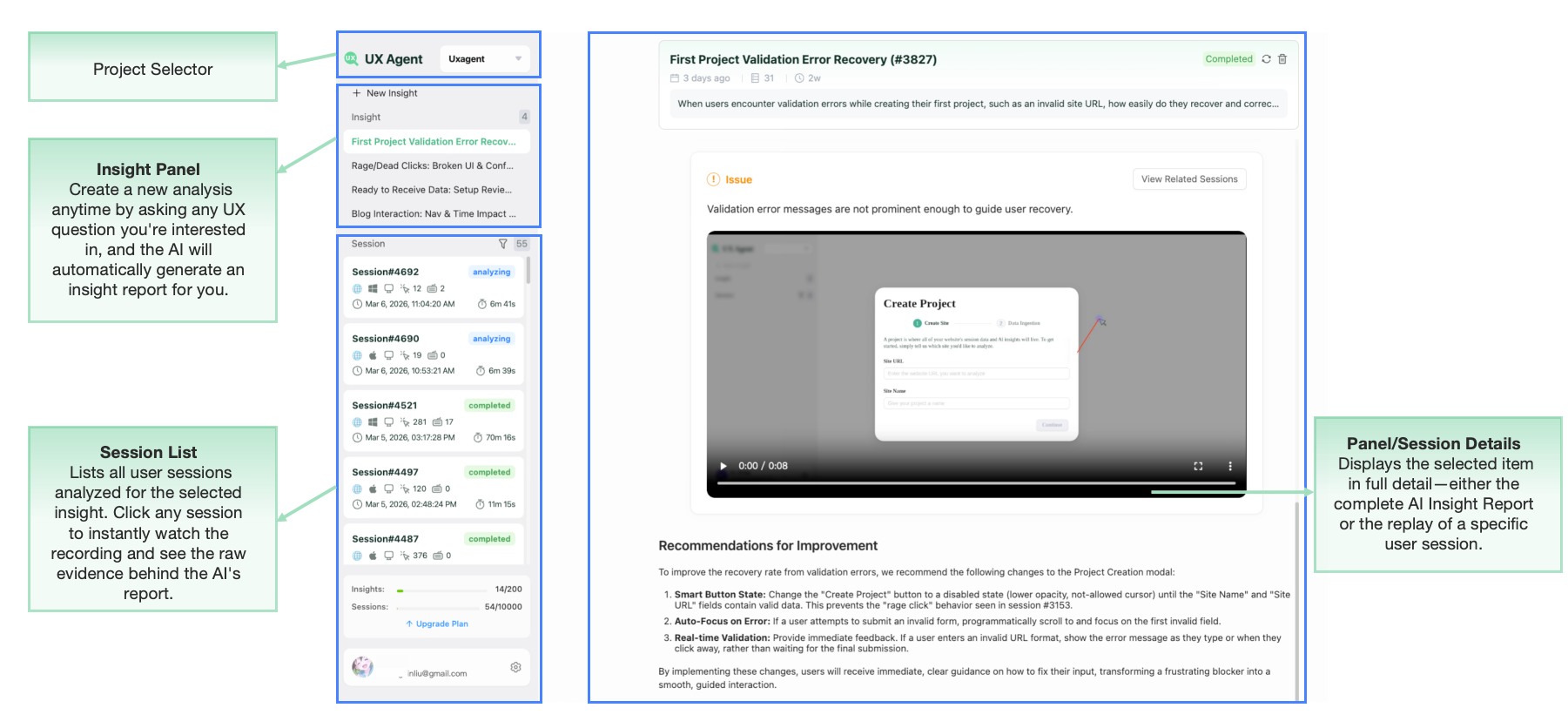
This makes the analysis more useful than a generic best-practice checklist. Instead of saying “make the product page clearer,” the team can see which product page created friction, what the shopper tried to do, and which behavior pattern appeared repeatedly.
For a founder, that means less guessing. For a growth manager, it means a stronger argument for which experiment to run next. For a Shopify or CRO agency, it means recommendations can be supported by observed behavior rather than only opinion.
From Better Tracking to Better Decisions
Many Shopify teams try to solve growth problems by buying more traffic. Sometimes that works. But if the store experience is leaking confidence, more traffic only sends more visitors into the same friction.
The better question is:
Are we learning enough from the shoppers we already have?
Clean tracking makes traffic measurable. UX Agent makes shopper behavior understandable.
For Shopify teams already investing in ads, landing pages, email, and conversion optimization, this combination can make the next iteration more focused. Instead of debating opinions, teams can look at cleaner performance data and real shopper behavior together.
For Shopify teams that already track conversions but still ask why shoppers are dropping off, UX Agent is built for that next question.